Incident Description
Date: November 23, 2026
Weather: Crystal clear, 8 degrees F, 5mph winds
I had been super sick for six days and housebound, aching to get out and do anything. It was a crystal-clear day, and it had been below freezing for a few days in a row. Early wild ice skating (I did a bonus episode on this last year!) had been going on for about a week in some places. It was the first day I felt good enough to leave the house and get my dog and me some exercise, despite still having a super bad cough.
Items I grabbed from my house:
A stuff sack with straps
Some snacks
A baby Nalgene of water
Nordic ski poles
Regular ol’ hockey ice skates that I got from Play It Again Sports years ago
A set of extra puffy pants and an extra puffy jacket (along with all my cold weather layers)
My brand new Arc’teryx Postur boots
Dog with Garmin e-collar
I headed to my favorite ice skating place, Rabbit Slough, just outside Wasilla, Alaska (about 45 minutes away from Anchorage). No one was there. The conditions from the trailhead looked excellent.
I put on my ice skates, loaded my stuff sack with straps, and hit record on my Gaia App to map my route (which I always do so I can collect analytics and find my way home if it’s a new route).
The ice was really good. Smooth and untracked, with some obvious holes and thin spots in the middle of the slough that were easy to avoid on either side. My dog mostly ran along the side of the slough through the tall grass, which had a few inches of snow on top. He prefers that because there are more sniffs in the grass than on ice. It’s nice because I don’t have to worry about him too much since he’s generally out of harm's way off the ice.
However, about 1.5 miles into my skate, he decided to cross the slough at one of the dark patches. He cautiously noticed the consistency of the ice changing, so he timidly walked around the dark-colored, narrow portion of thin ice. I thought, “Wow! My dog is so smart for being able to notice that and have the intuition to walk around that hazard.”
About 5 minutes later, I was really enjoying the solo skate experience and finally being outside after 5 straight days of being bed bound from either having COVID, strep throat, or the flu (or all of them combined?) when my dog crossed the slough again in front of me and broke through the ice. Where he broke through was slow-moving water with little to no current. I tossed my poles off to the side, got on my hands and knees, dropped to my belly, and reached as far out as I could for him as he swam back and forth between the broken ice, trying to claw onto the thicker ice shelf.
He couldn’t get himself up.
This thin section was about 20 feet long and about 4 feet wide. As he kept swimming back and forth trying to crawl back onto the ice, I knew there was no way I was going to watch my dog drown in front of my eyes. He’s literally my pride and joy. I lowered my center of gravity, called him back to my side of the slough, grabbed his e-collar, and yanked him up. As soon as his top half was on the ice, the extra 52 pounds of his weight broke the ice where I was lying, and I went in with him.
At this point, I was able to grab hold of his back side and push his whole body up onto the ice. Now I had to figure out how to get myself to safety. All my puffy clothes soaked up water, which made my body feel much heavier and less buoyant. I sank pretty quickly and felt my ice skates touch the bottom of the slough. It was soft and squishy. I pushed myself up from the bottom, almost like a little jump or hop, and got my arms and chest onto the ice. The ice shelf broke again. I tried this method again and kept my center of gravity very close to the surface. The water was chest high. Maybe 4 feet deep. If I hadn’t been able to touch the bottom of the slough to push off, I really don’t think I could have gotten out of the water at all.
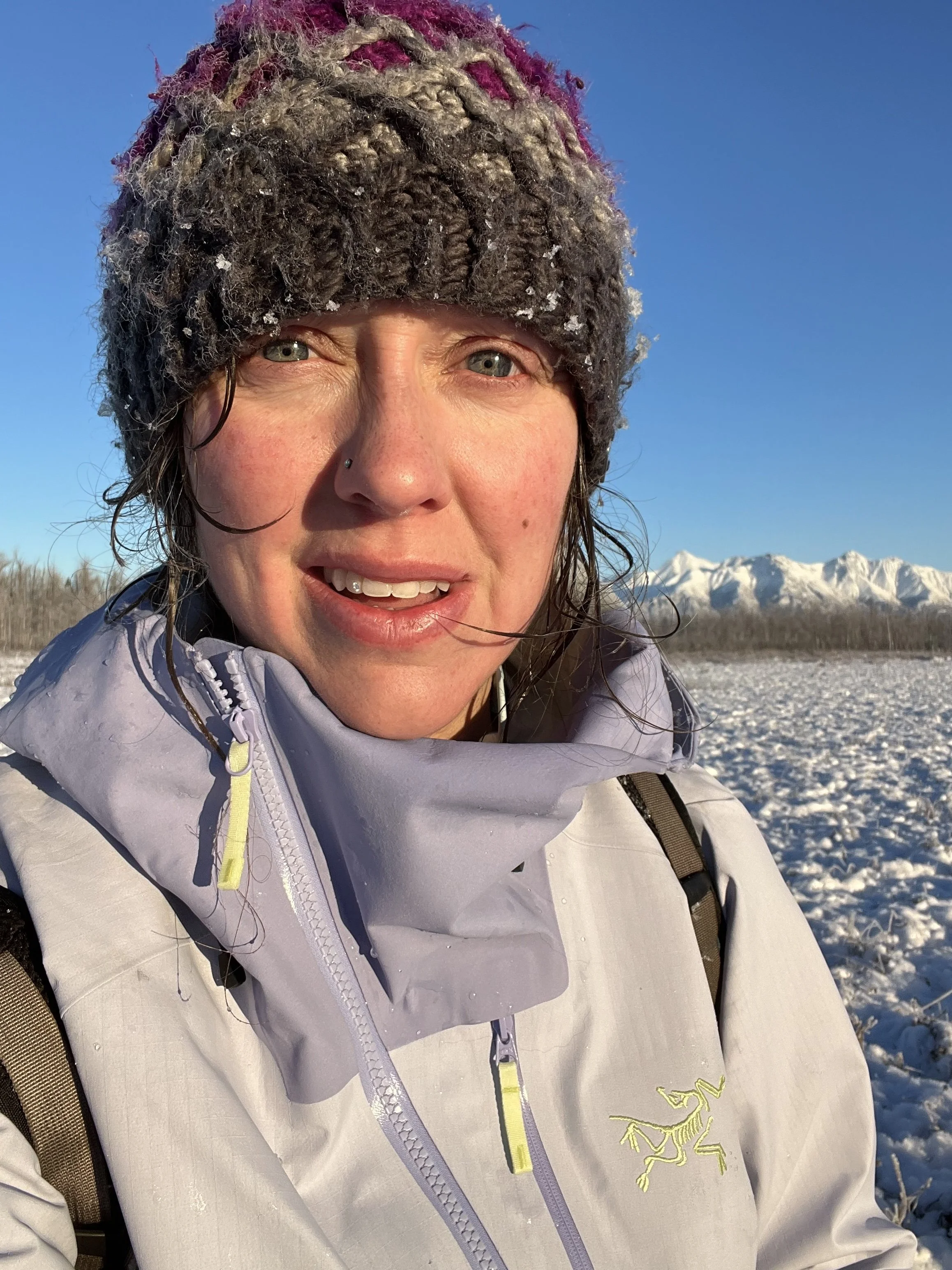
Super scary to realize….
Once I was on the surface, I rolled a few times to the shoreline and sat in the 3 inches of snow. I quickly removed my ice skates, puffy pants, and puffy jacket, and put on my new Arc’teryx Postur boots. They are insulated puffy snow boots with a nice sole for walking.
I did a quick inventory check. I still had my phone, my dog’s e-collar remote, my pack, and everything else I came with.
After putting my boots on and stuffing all my wet clothes and skates into my stuff sack, we walked through the snowy fields, weaving in and out of the tree line that lines the slough shores all the way back to my 4Runner. I noticed myself starting to stumble, which is one of the first signs of mild hypothermia. Once I got back to the parking lot, someone had just pulled up,, and I asked for help unzipping my jacket because the zipper and my hands were both frozen. I was most definitely mildly hypothermic by the time I got to the car.
Incident Post-Mortem
I’d call this an accident and a near miss. It was an accident because it shouldn’t have happened. It could have been avoided. And I kick myself because I’m the producer of the Sharp End Podcast. Shouldn’t I know better?? It was a near miss because I could have so easily watched my poor dog swim back and forth and unsuccessfully attempt to claw his way to safety and drown. I could have drowned if the slough was 4 inches deeper and I couldn’t touch the bottom to bounce my way to safety.
Injuries:
Light frostnip on my fingers
I have a huge scrape and massive bruise on the side of my entire left thigh, as well as a few other large bruises and scrapes on my body, likely from breaking through the ice or trying to claw my way up onto the ice.
Bruised ego
Lessons & Takeaways
What I did right:
I packed an extra layer of warm clothes in my pack and in my vehicle.
I told someone where I was going for the afternoon.
I wore appropriate layers: 100% wool clothes on top and bottom, as well as layered puffy pants, a puffy jacket, and a waterproof wind layer on the outside.
All my pockets were zipped up so I didn’t lose my phone, keys, or my dog's e-collar remote.
I stayed calm and objectively took care of what needed to be done without panicking.
I’ve taken cold water immersion training.
What I did wrong:
I fell into the heuristic trap of a scarcity mindset because I had been sick and homebound for five straight days, and I really wanted to get out in the good weather.
I was complacent because I had skated the Rabbit Slough a handful of times in previous winters and knew the route.
I didn’t have the safety ice picks that people wear around their necks in case they fall in. These safety tools cost about $20 and make a very inexpensive gift or investment!
I didn’t turn around when I noticed some of the thinner spots of ice in the middle of the slough were getting bigger. I just navigated around the thin parts and stayed close to the edge. I justified it as being within my personal risk tolerance.
I didn’t account for my dog being a dog and what I would do if he fell in. I literally had no plan for that scenario.
I didn’t line my stuff sack with a trash compactor bag to keep all my extra clothes and boots dry in case I fell in, which is something you should always do. Luc Mehl, founder of Triple Point Training (Ice Safety and Rescue courses), recommends having an entire set of extra clothes in a dedicated dry bag.
I didn’t bring an extra pair of warm socks with me in my pack to change into.
I have cold urticaria, which is a fancy way of saying “allergy to the cold.” Basically, when my skin is exposed to cold, I break out in hives all over my body. I’ve even gone into anaphylaxis before. When I’m moving and I layer intentionally, my body isn’t affected. All to say, my Benadryl and epinephrine were in my car at the trailhead, 2 miles down the creek. If I wasn’t prepared with adequate extra safety clothing layers, my allergy could have been triggered with no way to reverse it.
I trusted that my dog had better instincts for avoiding thin places because he was doing that up until that point. In every one of Luc Mehl’s water safety courses, he talks about the only formal study he knows of where, for two seasons on the East Coast, 85% of fire department rescue incidents involved going in after people went in to rescue domestic animals. That is a staggering statistic!
Additional Considerations
I told my parents afterward, and they both said, “Why did you go alone!? Why must you do everything solo? You need to have a partner for these activities!” But look, I’ve done more outdoor adventures solo than with partners because I’m 39 and it’s hard to find outdoor partners these days, especially on a Monday afternoon. If I waited around for someone to come with me, I’d never get out and do anything which, frankly, I’m not willing to trade.
Do I put my dog in a life vest for slough skating? I actually do have him wear a life vest when we are skating on lakes early season, but for a slough or creek? I imagine him just floating downstream and getting caught under the ice where I couldn’t rescue him. Would a life vest matter? Or would the added bulk of the vest make it more difficult for the dog to get out? I’m not sure.
Am I a bad dog mom? Probably…. But I try my absolute best not to be.
Should I recalibrate my personal risk tolerance??
My Experience Sharing On Social Media
A guy named Eric Withers left a comment on my Facebook post about this. His comment was, “ Are you a moron or just stupid? Can’t you see the ice is not ready to be on yet?” That sure gave me something to think about. Perhaps I am both a moron and an idiot. I started this podcast to shift outdoor culture toward learning and growth instead of shame, blame, and judgment. These comments are exactly why no one wants to step up and share their accident or near miss. It's out of complete fear of being judged and belittled.
I got so many negative comments on my social media post. From complete strangers! It makes me feel truly sad that a total stranger can say such horrible and judgmental things to a person they’ve never met. Would they say those things to their brother, sister, or best friend if it happened to them? Would this person be able to post their accident online so others can learn from it? Or does this person sit at home and watch other people recreate on TV in the comfort of their own home?
I also want to thank my friends and family who reached out to see if I was okay. The friends and family who genuinely care about my well-being and offered me love, reassurance, and support, including my mom, dad, all my siblings, Carolyn, and Walt, just to name a few. There are way more kind people who wrote kind things too.
Let me know your comments below. And please, just because I’m the creator of the Sharp End Podcast doesn’t give anyone the right to shame or judge me. The entire reason I started this podcast was to create a safe place for people to share their accidents and near misses without judgment, shame, or blame. I am a human, just like you, and I’m allowed to have accidents just like everyone else as long as I learn from my mistakes.
Water Safety Courses Could Save Your Life Too!
I highly recommend checking out Luc Mehl’s water safety courses. The next courses with Triple Point Training are December 5 and 6.
Learn how to grade wild ice here.
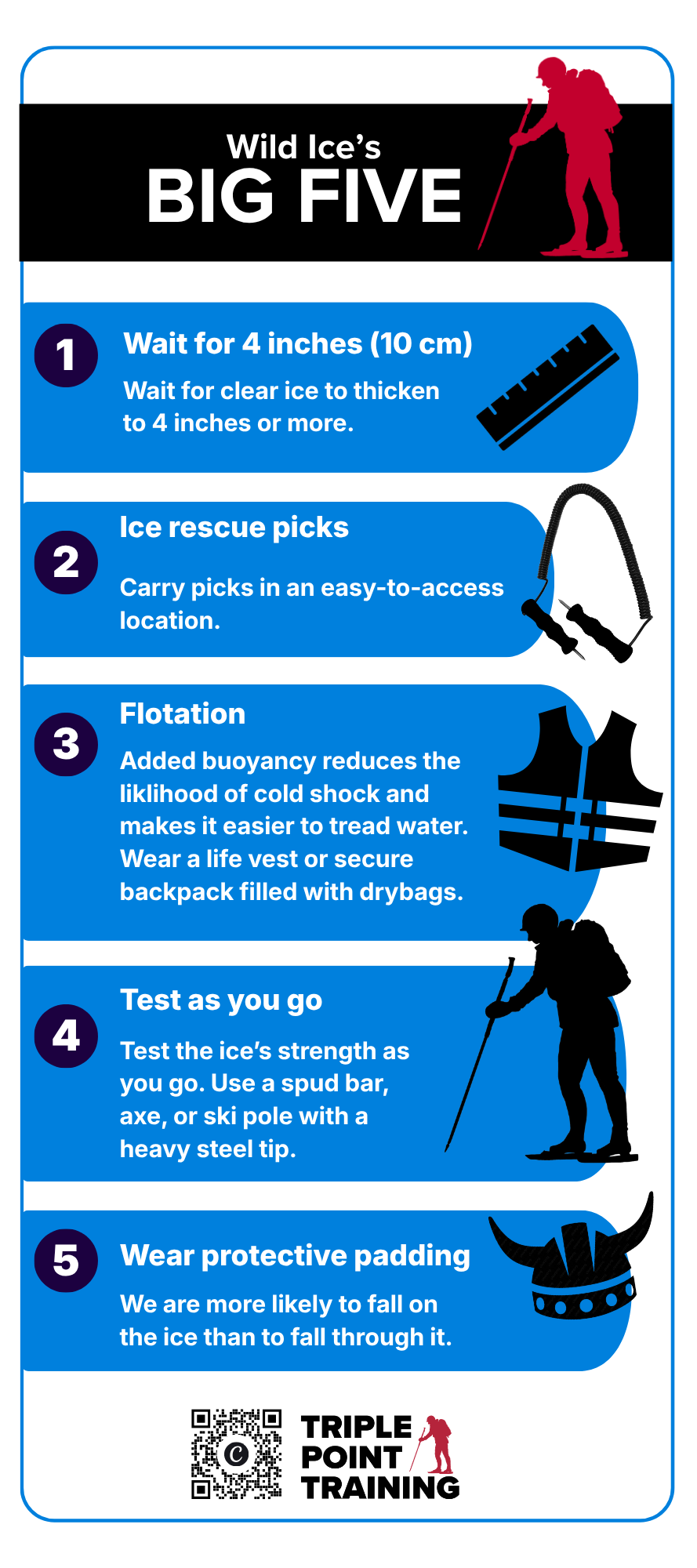
I’ll also leave you with Wild Ice’s BIG FIVE:
Wait for 4 inches (10 cm)
Ice Rescue Picks
Flotation
Test as you go
Wear protective padding
Where To Watch & Listen: I Broke Through The Ice
Thanks For Reading!
Thank you for allowing me to share this experience! This community is the reason I keep the podcast going.
If you want to support the show, the best things you can do are share an episode with someone in your outdoor community, leave a review on your podcast platform of choice, or join me on Patreon. Every bit of it helps more than you know!